07 October, 2026
Wednesday
TECHNOLOGY
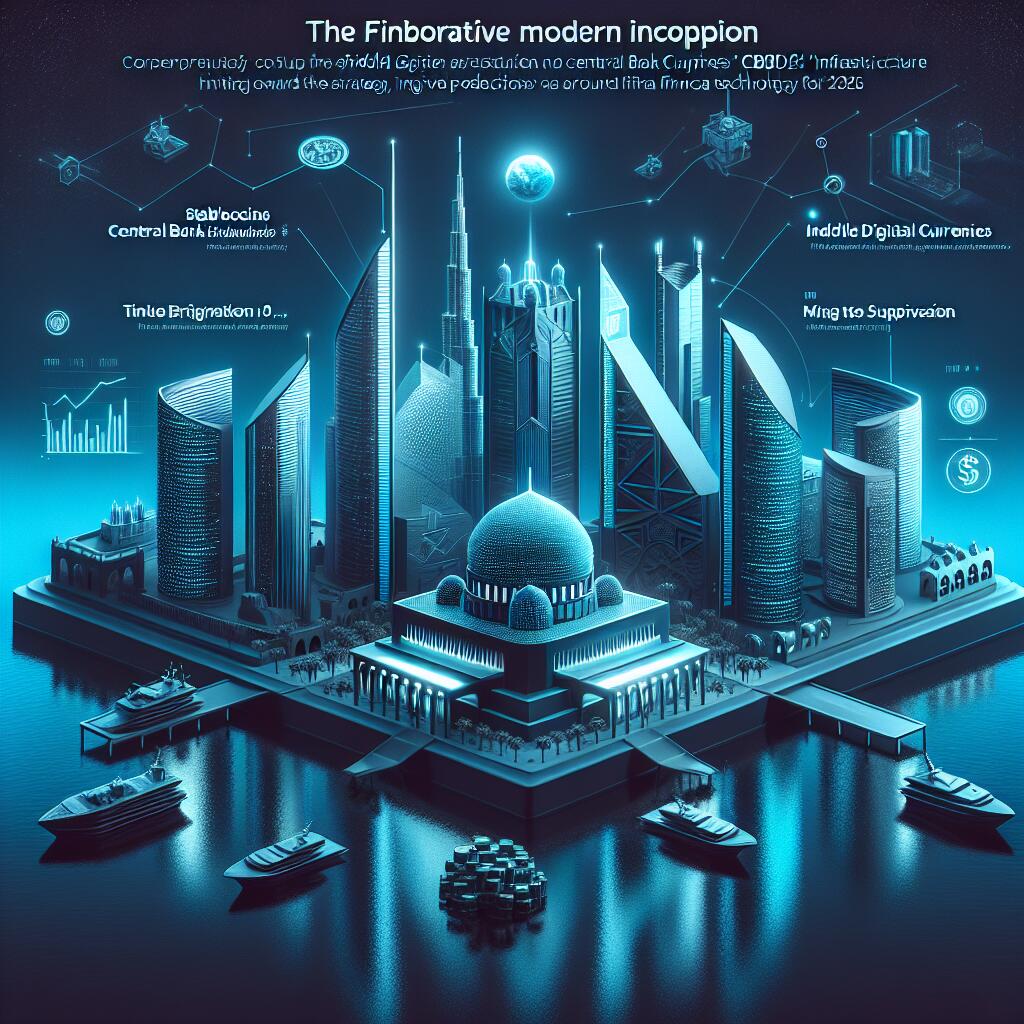
Gulf Payments Push Accelerates as Stablecoin and CBDC Infrastructure Moves Mainstream
Gulf Payments Push Accelerates as Stablecoin and CBDC Infrastructure Moves Mainstream
Financial institutions across the Gulf are moving beyond experimentation and into infrastructure building as stablecoins, central bank digital currencies, and tokenized deposit frameworks become central to the next phase of digital payments. What was once framed as a niche crypto narrative is now being recast as a broader banking modernization effort, with the region positioning itself for a multi-year buildout between 2026 and 2030.
The shift is being driven by a mix of strategic ambition, regulatory supervision, and demand for faster, programmable money systems. At the same time, the rise of agentic AI in finance and the emergence of autonomous commerce stacks are reshaping how institutions think about payments infrastructure. Together, these trends point to a future in which digital value transfer is embedded directly into business workflows, treasury systems, and machine-led transactions.
Key Details
One of the most important ideas gaining traction is that tokenized deposits should not be viewed purely through a crypto lens. Instead, they are increasingly being treated as an upgrade to core banking rails. That framing matters. It shifts the conversation away from speculation and toward regulated financial infrastructure that can support settlement efficiency, interoperability, and compliance at institutional scale.
In the Gulf, this narrative aligns neatly with policy-led digital transformation agendas. Stablecoin and CBDC infrastructure discussions are no longer isolated policy exercises. They are part of a larger push to build supervised, scalable systems that can support cross-border trade, domestic payments innovation, and government-backed modernization programs. Banks, regulators, and technology providers are all expected to play a role in defining how these systems coexist.
Industry observers are also looking at 2026 as a breakout year for new financial operating models. Predictions for the year increasingly center on AI agents that can handle financial tasks, commerce systems that act autonomously, and programmable money tools that make transactions more intelligent and context-aware. In that environment, infrastructure choices made today could determine which institutions are best positioned to capture future payment flows.
Industry Impact
The implications are broad. For banks, tokenized deposits may offer a path to modernize settlement without abandoning regulated deposit structures. For regulators, the challenge will be balancing innovation with robust supervision, especially as new digital payment layers interact with existing banking systems. For merchants and platforms, the next-generation commerce stack could enable automated transactions executed by software agents with minimal friction.
This convergence of digital currency infrastructure, AI-native finance, and autonomous commerce suggests that the next competitive edge will come from orchestration, not hype. Institutions that can connect compliance, programmability, and scale into one coherent stack are likely to define the market. In that sense, the Gulf’s infrastructure push is not just about digital currency experimentation. It is about redesigning how money moves in a machine-driven economy.
Official Source: https://www.fintechwrapup.com/p/reports-lets-dive-into-9-fintech
Tags:
What's your reaction?
0

AWESOME!
0

LOVED
0

NICE
0

LOL
0

FUNNY
0

EW!
0

OMG!
0

FAIL!
Recent News

08 Aug 2026