22 October, 2026
Thursday
Ai
MemPalace v3.4.0 Adds Pluggable Vector Backends and Docker Support
MemPalace v3.4.0 Adds Pluggable Vector Backends and Docker Support
MemPalace, the open-source memory management system for AI agents, just shipped v3.4.0. The release is a big one: it makes vector backends pluggable, ships official Docker images, and adds a migration tool to fix legacy wing names. For developers building long-term memory into AI applications, this is the kind of update that reduces lock-in and operational friction.
What Changed
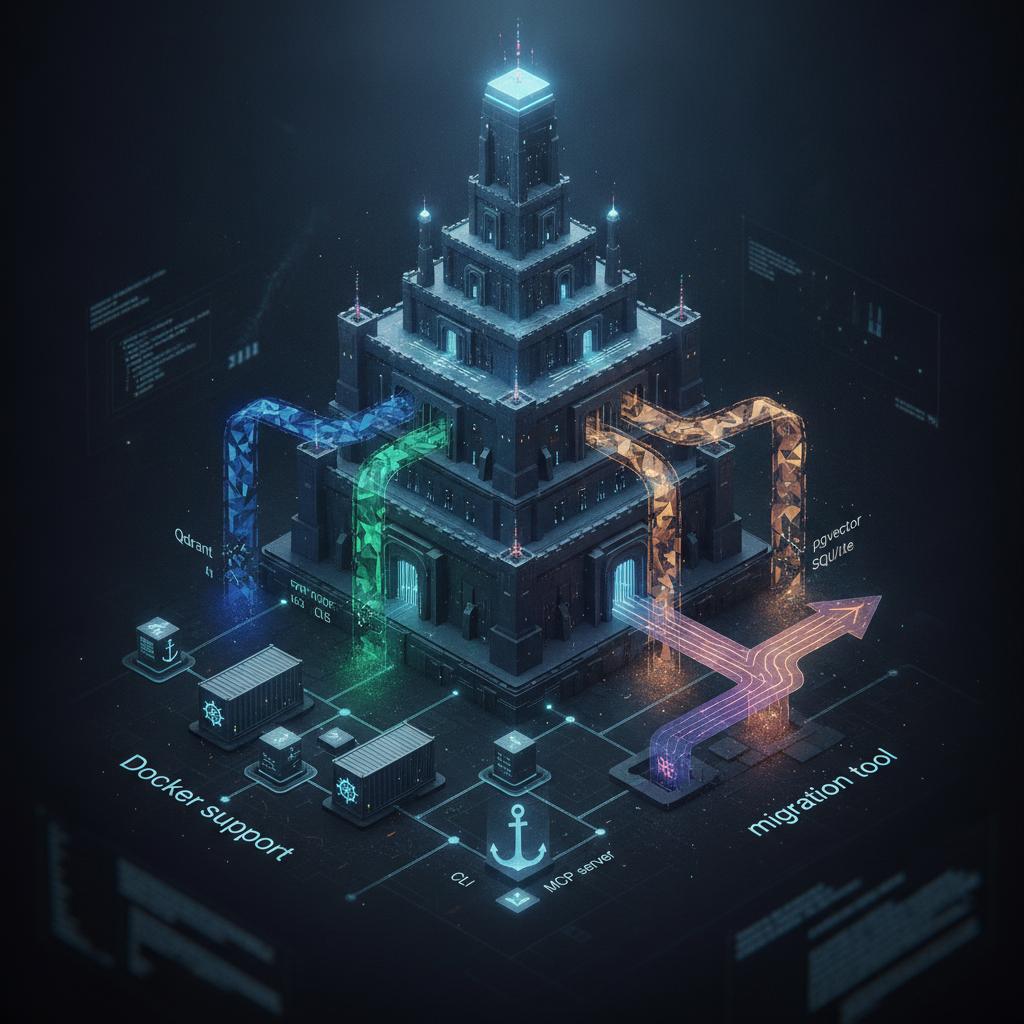
Before v3.4.0, MemPalace only supported ChromaDB as its vector store. That was fine for prototyping, but production deployments often need options. Now you can choose between Qdrant, pgvector, and a SQLite exact-search backend, set via the MEMPALACE_BACKEND environment variable or the --backend CLI flag. Each backend has its own trade-offs: Qdrant is fast at scale, pgvector fits nicely into an existing Postgres stack, and SQLite exact is great for small-scale or offline use.
Docker support is here, too. Both CPU and GPU images are available for the MCP server and CLI. That means you can spin up MemPalace with a single docker run command, no manual dependency wrangling. The GPU image is particularly useful if you're running embedding models on the same node.
There's also mempalace migrate-wings, a one-time migration that normalizes legacy wing names. If you upgraded from an older version, you might have palaces that are no longer discoverable because of leading or trailing separators in wing names. This command strips them out. The project provides detailed recovery docs at docs/recovery/wing-name-migration.md.
Why It Matters
Pluggable backends mean you're no longer tied to ChromaDB. That's a big deal if your team already uses pgvector for everything else, or if you need the performance of Qdrant at scale. The Docker images lower the barrier to entry for new users — no more fiddling with Python environments. And the wing-name migration shows the team is thinking about backward compatibility, a rare virtue in early-stage open-source AI tools.
One thing that stands out: the release notes are short but cover exactly what matters. No fluff. It's a sign that the project is maturing. I'd love to see benchmarks comparing backend performance, but for now the flexibility alone is worth the upgrade.
Official Source: https://github.com/MemPalace/mempalace/releases/tag/v3.4.0
Tags:
What's your reaction?
0

AWESOME!
0

LOVED
0

NICE
0

LOL
0

FUNNY
0

EW!
0

OMG!
0

FAIL!
Recent News

08 Aug 2026