17 October, 2026
Saturday
Ai
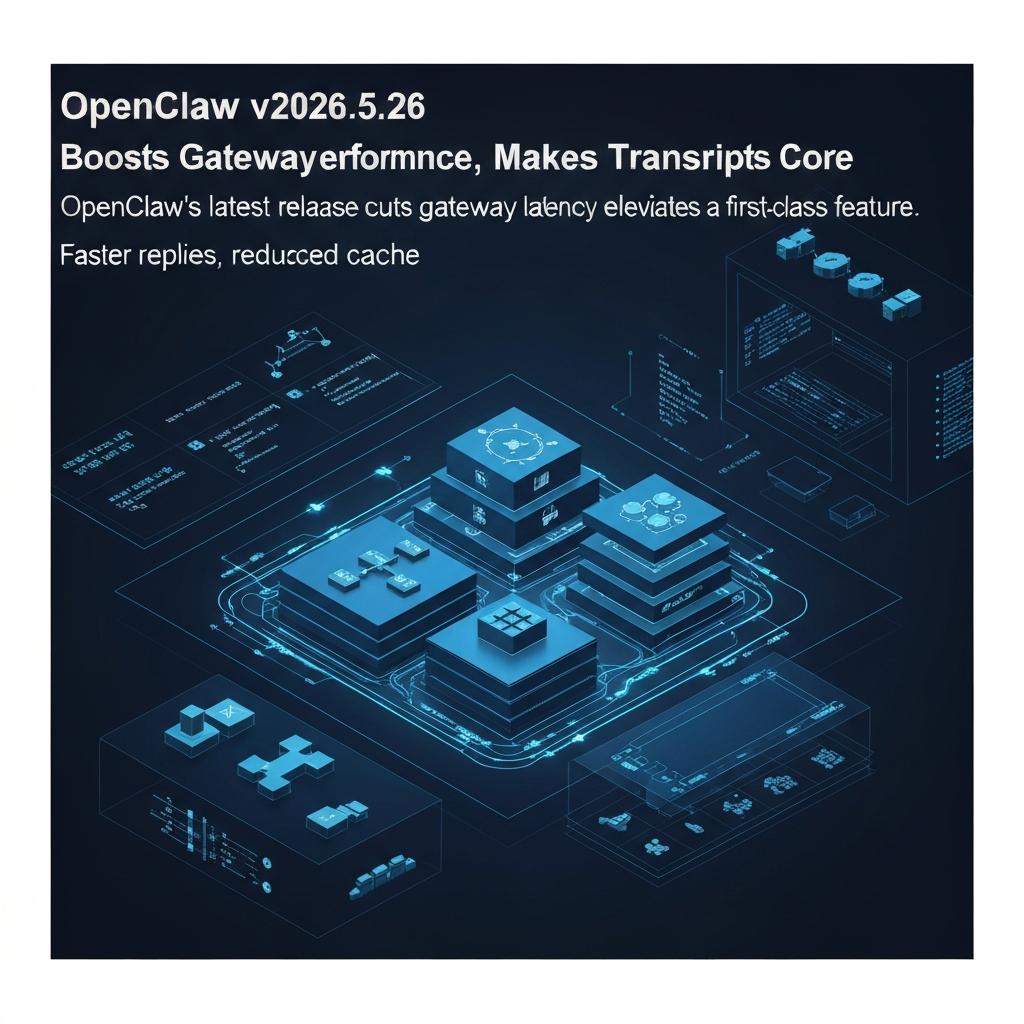
OpenClaw v2026.5.26 Boosts Gateway Performance, Makes Transcripts Core
OpenClaw v2026.5.26 Boosts Gateway Performance, Makes Transcripts Core
OpenClaw just shipped version 2026.5.26, and it's a surprisingly impactful update for an AI platform that powers chatbots, meeting summaries, and media analysis. The headline? Gateway responses are noticeably faster, and transcripts—once a secondary component—are now the backbone of several core features. This isn't a flashy AI breakthrough; it's the kind of infrastructure refinement that makes a real difference in daily operations.
What Changed
The team targeted startup and runtime overhead head-on. Previously, every launch triggered repeated scans of plugins, channels, sessions, usage costs, warnings, scheduled services, and filesystems. Those redundant checks are now eliminated, shaving seconds off cold starts. That matters when you're spinning up containers or reloading after a config change.
Visible replies got a speed boost too. The system now separates user-facing sends from slower background tasks—follow-ups like logging or analytics no longer block the response. Under load, Gateway runtime and session caches churn less aggressively, which means fewer cache misses and steadier performance. In practice, that translates to snappier chat interactions and less memory pressure.
The bigger shift is how transcripts are treated. They're no longer just logs. Meeting summaries, source-provider chunks, cleaned user turns, media provenance, Codex mirrors, WebChat replies, and even CLI/TUI replay now all pull from a single, more reliable transcript path. It's a unification that reduces inconsistency. Before, different features might have used separate data stores or pipelines; now they share one trusted source.
Why It Matters
Let's be honest: most users won't notice cache churn or startup scan optimizations directly. But they will notice faster replies and fewer glitches. And when transcripts become the single source of truth for so many features, debugging gets easier. A failed meeting summary? You can trace it back through the same transcript that feeds the CLI replay. That's powerful for developers and operators.
From an editorial perspective, this update signals a maturation of the OpenClaw platform. It's moving away from bolting on features toward consolidating its data model. Transcripts as a core primitive—smart move. It reduces technical debt and makes future integrations more straightforward. I'd wager the next big feature will build on this foundation.
One caveat: if your deployment relies heavily on custom caching strategies, keep an eye on the new churn behavior. The old approach might have been tuned for your specific load. But for most, this is a strict improvement.
Official Source: https://github.com/openclaw/openclaw/releases/tag/v2026.5.26
Tags:
What's your reaction?
0

AWESOME!
0

LOVED
0

NICE
0

LOL
0

FUNNY
0

EW!
0

OMG!
0

FAIL!
Recent News

08 Aug 2026