25 October, 2026
Sunday
NEWS
Global Banking Held ‘to Ransom’ by U.S. Card Giants Visa and Mastercard
Global Banking Held ‘to Ransom’ by U.S. Card Giants Visa and Mastercard
A credit card is held up in front of a Visa logo. Visa and Mastercard together handle the vast majority of card payments worldwide.
Banks and entire countries around the world are increasingly wary of the outsized power that Visa and Mastercard hold over global finance. The two U.S.-based corporations process most electronic payments made with credit and debit cards, effectively controlling where and with whom money can be spent. While consumers might assume their own banks set the rules for card transactions, in reality those banks are bound by the networks’ terms – and by extension, U.S. policies. This dominance has left nations and individuals exposed to the whims of American sanctions and corporate decisions, with recent flashpoints underscoring the global risks of such dependence.
A Duopoly Dominating Global Payments
Together, Visa and Mastercard account for an overwhelming share of card payments outside a few countries. In many markets they command over 90% of debit and credit card transactions, a virtual duopoly. These companies don’t lend money or hold accounts themselves; instead, they run the payment networks that connect shoppers, merchants, and banks. Every time you swipe or tap your card at a store or ATM, the transaction rides on rails owned by one of these two giants (or their affiliates like Visa’s Plus or Mastercard’s Cirrus/Maestro). This means banks worldwide must cooperate with Visa or Mastercard to offer customers the convenience of global card acceptance. From London to Lagos, most “local” bank cards are actually branded by one of the big two – and subject to their operating rules.
Those rules are extensive. Visa and Mastercard set technical standards, security requirements, and crucially, they decide which businesses or countries are allowed to use their networks. They can refuse service to banks, merchants, or entire regions. If a card issuer or vendor doesn’t meet their standards – or if a government runs afoul of U.S. regulations – these networks have the power to cut off access, instantly rendering cards useless for payments. In effect, a handful of American executives and regulators can dictate who can pay whom across the globe. “We joke that Visa and Mastercard are the real financial border guards,” says one international banking expert – only half in jest.
Sanctions: When Nations Get Unplugged
This concentration of control has turned Visa and Mastercard into potent tools of geopolitical power. When the U.S. government imposes financial sanctions on a country, the card networks often follow suit by blocking transactions linked to that nation. In some cases they halt services entirely, leaving millions of ordinary people unable to use the credit or debit cards issued by their own banks. Recent history is filled with examples:
-
Russia (2014 & 2022): After Russia’s annexation of Crimea in 2014, several Russian banks (such as Bank Rossiya) were sanctioned by Washington – and Visa and Mastercard promptly stopped processing those banks’ cards. Customers of the affected banks suddenly found their cards declined outside Russia and online, and even ATM withdrawals were disrupted. The Kremlin blasted the move as a wake-up call, fast-tracking a domestic payment system to reduce reliance on the U.S. giants. President Vladimir Putin even opened an account at the sanctioned bank in a show of defiance, but also signed a law to create “Mir,” Russia’s own card network, to keep the economy running if foreign networks pull out again. That preparation proved critical in 2022, when sweeping sanctions over the Ukraine invasion led Visa and Mastercard to suspend all operations in Russia. Within days, any Visa or Mastercard issued by a Russian bank stopped working abroad, and cards issued elsewhere no longer worked inside Russia. Russians traveling overseas were left stranded without access to funds on their cards, and international websites declined Russian card payments. The domestic Mir system allowed local purchases and ATM use to continue inside Russia, softening the blow. Still, the sudden cutoff underscored how dependent even a major economy had been on Western payment infrastructure – and how U.S. policy could isolate a country’s financial lifelines overnight.
-
Iran and Syria: U.S. sanctions have for years completely excluded countries like Iran and Syria from the global card networks. Ordinary Iranians, for example, cannot use Visa or Mastercard at all – neither at home nor abroad – because no Iranian bank is connected to those systems under U.S. restrictions. Tourists visiting Iran discover they must carry cash, since international cards simply don’t function there. Syrian consumers have faced a similar reality. This financial isolation predates newer innovations; long before any nuclear deal or conflict talks, the swipe of a card was a casualty of sanctions. People in these countries rely on cash or any nascent local alternatives, essentially barred from the convenience of modern payment tech by geopolitical decisions.
-
Venezuela: In 2019, amid U.S. efforts to pressure President Nicolás Maduro’s government, American authorities put state-owned Venezuelan banks in the crosshairs. Visa and Mastercard were instructed to cease business with certain sanctioned institutions – a move aimed at the regime’s finances but which also snared ordinary account holders. That year Mastercard cut off service to two small Venezuelan banks (including the Armed Forces Bank) tied to the state. Customers of those banks saw their credit cards suddenly stop working as international payment tools. Hyperinflation had already driven many Venezuelans to use U.S. dollars in cash, but losing card access added insult to injury. Venezuela’s banking regulator scrambled to develop a home-grown payment system to process local card transactions, anticipating that all Venezuelan banks might eventually be frozen out of Visa and Mastercard. (As of 2020, the U.S. had indeed banned the networks from serving any government-run Venezuelan banks, effectively forcing those banks’ cards off the global grid.)
-
Other Hotspots: A litany of sanctioned states – North Korea, Sudan, Myanmar (Burma), and others – have likewise been persona non grata to the big card companies. In Myanmar, for instance, new U.S. sanctions following the 2021 military coup meant that certain Burmese banks were no longer able to work with Visa or Mastercard. While Myanmar’s economy is less card-reliant, the message was clear: any country on the wrong side of U.S. policy risks being digitally “unbanked.” Even Cuba, long under U.S. embargo, has only very limited card connectivity (largely via non-U.S. networks or special arrangements), which complicates everything from tourism to online subscriptions for residents.
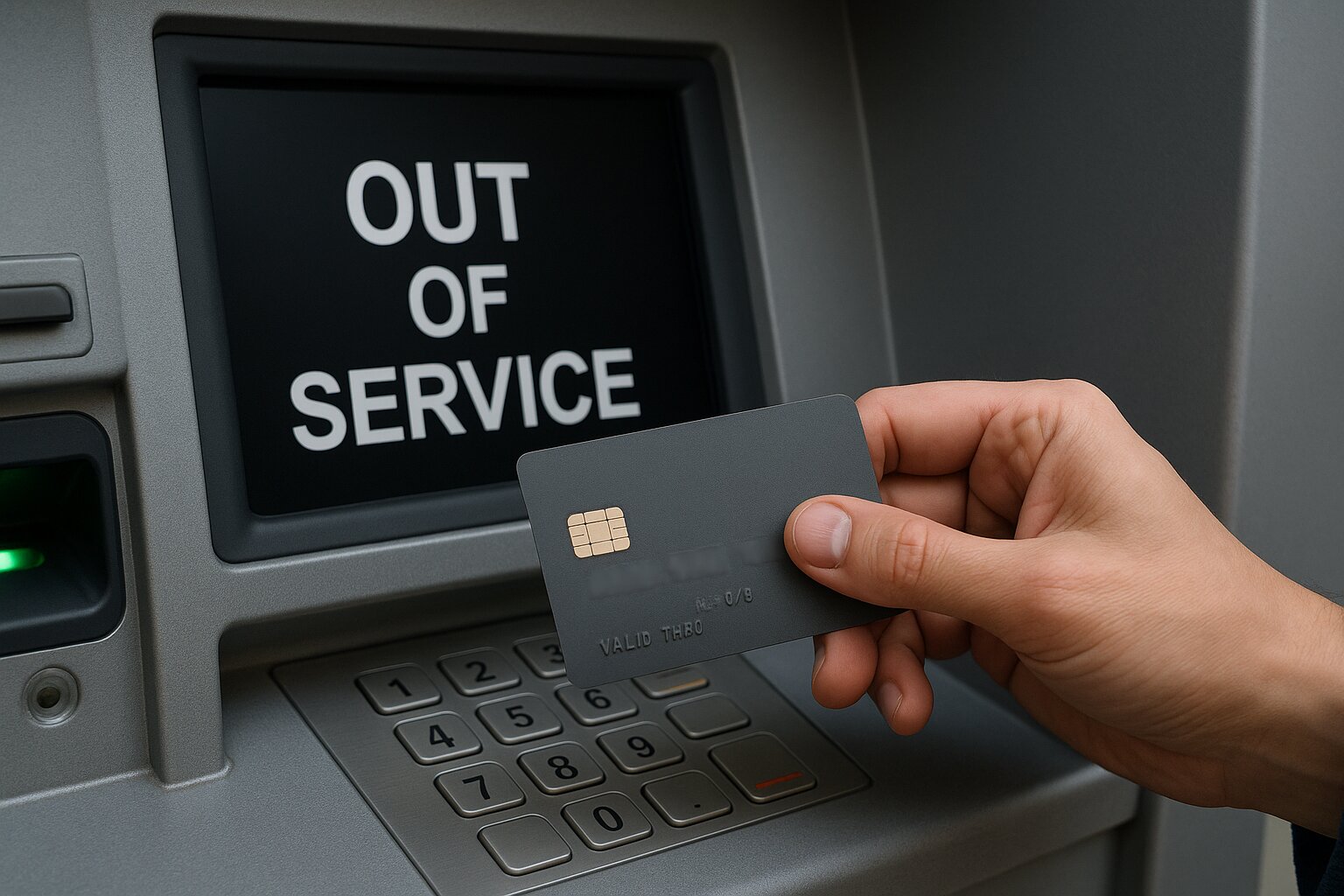
When Visa and Mastercard pull the plug on a region, it’s not just credit cards for shopping that stop working – ATM networks often go down as well. An ATM in one country dispensing cash from a card issued in another usually relies on these same payment rails. So sanctions can suddenly sever access to cash across borders. For example, when Russian banks were blocked, Russian travelers abroad could not withdraw money from ATMs using their debit cards, and foreign visitors in Russia couldn’t use their cards to get rubles. In effect, an entire nation’s plastic money goes inert, underscoring how deeply integrated these networks are in daily life.
Notably, the card companies argue they are simply obeying laws and doing the right thing in such cases. “We are compelled to act following Russia’s unprovoked invasion of Ukraine, and the unacceptable events we have witnessed,” Visa’s chief executive Al Kelly said in 2022, describing the suspension in Russia as necessary and appropriate. From the perspective of Washington and its allies, cutting off payment services is a non-violent way to apply pressure on regimes. But for citizens on the ground, losing access to the world’s dominant payment systems feels like collective punishment, raising ethical questions about the human impact of financial embargoes.
Blocking People and Businesses – Without a Court
It’s not only rogue states that can find themselves frozen out. Private individuals and organizations have also been barred from using Visa and Mastercard’s networks, sometimes without any court order or law compelling it. The card giants maintain their own internal policies about acceptable transactions, and they face public and political pressures that can lead them to shut off services in controversial situations. This means a person’s ability to send or receive money via card can be terminated by corporate decision – even if their bank has no objection.
One famous example occurred in late 2010 when the whistleblowing site WikiLeaks released classified U.S. government documents. In response to U.S. government outrage (though without any formal charges against WikiLeaks at the time), Mastercard and Visa abruptly blocked all donations being made to the organization. Supporters around the world who tried to contribute with their credit cards found their payments denied – not by their own banks, but by the card networks. WikiLeaks later said this financial blockade choked off about 95% of its revenue, crippling the group’s operations. It took several years – and a court battle in Iceland – before some card payments were restored. “This is… a big victory in the ongoing battle against the financial companies that have attacked us,” WikiLeaks spokesman Kristinn Hrafnsson said in 2013 when a court ordered a local Visa agent to resume processing donations. The episode highlighted how a handful of firms could effectively enforce a political stance by cutting off the money flow, long before any judge weighed in.
More recently, content creators and businesses in the adult entertainment industry have felt the heavy hand of payment processors. In December 2020, Visa and Mastercard suspended service to Pornhub, one of the world’s largest adult websites, after allegations that Pornhub hosted illegal videos. This meant users could no longer buy Pornhub’s premium services with their cards, and critically, thousands of adult performers couldn’t get paid through the platform overnight. While combatting illegal content was the goal, the action also swept up countless legal sex workers who relied on those payment channels for their income. Then in 2021, the popular creator subscription platform OnlyFans announced it would ban sexually explicit content – a shock to its millions of users and providers of adult content. The reason given was pressure from “banking partners and payout providers.” It later emerged that major card companies and banks were uncomfortable with the site’s adult business, even though it’s legal; OnlyFans reversed the ban after public outcry, but not before exposing the influence payment networks wield over online speech and livelihoods. Essentially, if Visa and Mastercard won’t process payments for a category of service, that service can struggle to survive regardless of consumer demand or local legality.
These instances show that access to one’s own money via cards is not always solely a bank’s decision. You might have funds in your account and a willing bank, but if the card network blacklists the payee or merchant, your transaction will simply be declined. From independent media organizations and dissidents, to unpopular industries like adult entertainment or online gambling, various groups have discovered that the “rails” can be closed on them without warning. In some cases this is driven by moral or legal concerns (stopping criminal activity), but critics argue it also sets a dangerous precedent. They worry that a duopoly of U.S. companies could act as gatekeepers, raising censorship and fairness issues in the digital economy.
Rising Fees and Mounting Backlash
Aside from issues of access and sanctions, the cost of relying on Visa and Mastercard is another global concern. The card networks and issuing banks charge merchants fees on each transaction – often called “swipe fees” or interchange fees. These fees ultimately get baked into prices consumers pay. Over the last decade, despite technological efficiencies, the fees have steadily climbed, boosting network and bank profits at the expense of retailers and shoppers. In the United States, for example, total card swipe fees reached record highs in recent years (well over $100 billion annually and growing), as more purchases shift from cash to cards and the networks periodically hike certain rates. Every time you buy groceries or fuel with a card, a few percent of that sale goes to the card company and your bank – and merchants often raise prices to cover that cut.
Many businesses complain that Visa and Mastercard exploit their dominance to raise fees with impunity, since most customers expect cards to be accepted and there are few alternative networks. “Due to a lack of competition, Mastercard and Visa were able to raise ... fees to an unduly high level, costing businesses hundreds of millions,” a UK payments regulator, David Geale, remarked in 2023 after investigating steep fee increases. In fact, Britain’s regulator found that the two networks – which handle 99% of card transactions in the UK – had pumped up certain cross-border fees fivefold after Brexit removed an EU cap. The resulting costs to British merchants (an extra £150–200 million a year) are likely passed on to consumers through higher prices. Regulators in the UK and EU are now considering tighter caps on card fees and other measures to inject competition.
Similar battles are playing out worldwide. The European Union had earlier imposed interchange fee caps in 2015 to curb charges, and Australia and others have long regulated card fees. But Visa and Mastercard have found ways to increase earnings via new fees or shifting fee categories, prompting constant friction with merchant groups. Big retailers like Amazon have even threatened to stop accepting Visa at times in protest of high fees in certain countries. Small businesses, lacking negotiating power, feel the squeeze the most. As one supermarket owner put it, “Card fees are higher than our utility bills now – ultimately our customers foot that bill.” The rising cost of the card networks’ toll has become another facet of their monopoly problem, drawing scrutiny from lawmakers who note that higher fees also enrich U.S. banks at the expense of merchants globally.
Seeking Freedom: Alternatives and Risks in a Fracturing World
With economic nationalism and geopolitical tensions on the rise, many countries are rethinking the wisdom of depending on a U.S.-centric payments system. The fear is that in an unstable global trading environment, today’s friend could be hit by sanctions tomorrow – and find itself locked out of critical financial networks overnight. The dominance of Visa and Mastercard thus poses a strategic vulnerability: a single foreign policy decision in Washington can ripple through daily commerce from Buenos Aires to Beijing.
In response, a number of nations have been busy building alternative payment rails or promoting local card champions. We’ve seen Russia’s Mir network take off after the Crimea episode; by 2022, Mir was widely used domestically and Russia had inked deals to get Mir cards accepted in a few allied countries, softening the impact of the latest sanctions. China, for its part, has spent decades developing UnionPay, now one of the world’s largest card schemes by volume. While UnionPay is state-owned and primarily used in China, it has been extended internationally – often welcomed by countries as a non-Western option. In places like Iran, Chinese and Russian networks have reportedly stepped in to enable some card payments where Visa/Mastercard won’t go. India has launched RuPay, a domestic card network, and has actively encouraged its banks and citizens to use it. The Indian government has even offered incentives (like lower merchant fees and marketing support) to boost RuPay’s adoption, partly to break the foreign duopoly’s hold and keep fees low. Other emerging economies from Brazil to Nigeria are exploring ways to link up their own payment switches and reduce reliance on the U.S. giants, whether through bilateral agreements or new technologies.
Even Western allies have shown interest in diversifying away from Visa and Mastercard. In Europe, dozens of major banks have at times proposed a unified European card/payment system (projects dubbed “Monnet” or more recently “EPI” – European Payments Initiative) to challenge the duopoly. The motivation is both to foster competition and to ensure Europe isn’t completely beholden to external payment systems, especially after seeing the leverage those systems provide in sanctions. While progress has been slow and the first iterations faltered, discussions have intensified about sovereignty in payments. Likewise, central banks are researching digital currencies (CBDCs) that could enable people to send money without needing the card networks at all, potentially providing a fallback if card services are disrupted.
For now, though, Visa and Mastercard remain firmly entrenched. Global commerce still heavily depends on their systems, and alternatives often lack the reach or convenience that consumers and businesses have grown accustomed to. The card companies point out that they connect billions of people, prevent fraud, and make spending effortless worldwide – delivering great value until geopolitics intervenes. They caution that fragmenting the payment ecosystem could lead to inefficiencies or even greater costs in the short term. And indeed, creating parallel networks is expensive and time-consuming; Russia spent years getting Mir off the ground and still faced hurdles integrating it abroad.
Yet, as disputes proliferate on the international stage, more nations may conclude they have no choice but to hedge their bets. The world of banking and payments, critics argue, is effectively “held to ransom” by two U.S. corporations and the government behind them. In an era of trade wars, sanctions, and economic weaponization, that leverage could be used again in unpredictable ways. Global financial stability, some analysts warn, will depend on whether the world can find new balance – either through cooperation with reforms, or through competition via alternative systems – to loosen the grip of this American card monopoly.
In summary, the Visa/Mastercard duopoly offers undeniable convenience but at the cost of centralized control over worldwide commerce. From Moscow to Tehran, Caracas to Toronto, the reach of these companies means a swipe of plastic is never just between a buyer and seller – it’s subject to strategic interests far beyond. As the globe navigates increasingly unstable times, governments, banks and consumers alike are awakening to the risks of that reality, and grappling with how to ensure that access to one’s own money isn’t determined by the decisions of a distant few.
Tags:
What's your reaction?
0

AWESOME!
0

LOVED
0

NICE
0

LOL
0

FUNNY
0

EW!
0

OMG!
0

FAIL!
Recent News

08 Aug 2026